
Understanding Real Estate Digital Marketing
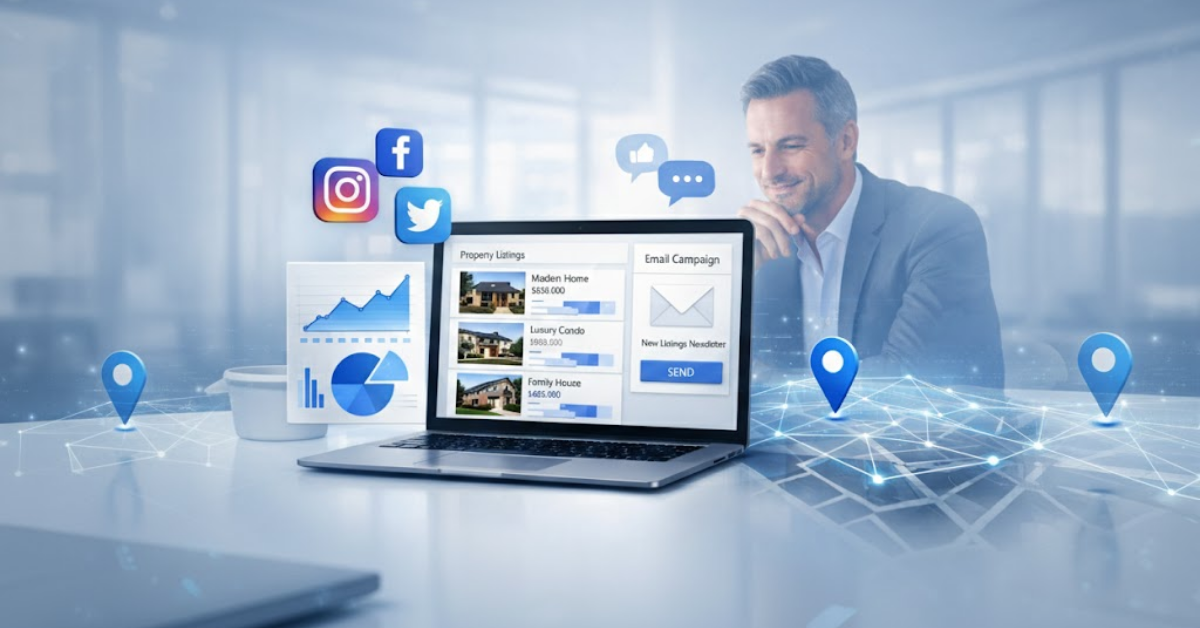
The U.S. real estate market has changed dramatically in recent years and so have buyer behaviors. Traditional marketing methods such as printed flyers, open houses and yard signs, are no longer sufficient to reach today’s tech-savvy clients. Buyers now rely on online research before contacting an agent and agents who fail to establish a strong online presence risk losing opportunities to competitors. Real estate digital marketing is a comprehensive approach that combines search engine optimization (SEO), social media, email campaigns, paid advertising, and innovative technologies like virtual reality to attract, engage and convert potential buyers efficiently.
Investing in digital marketing allows agents to reach buyers where they spend the most time, delivering personalized content that resonates with their needs. By leveraging digital tools, agents can target specific geographic areas, highlight unique property features and position themselves as trusted authorities in their local markets. The key benefit of a well-executed digital strategy is not just visibility but the ability to generate qualified leads who are actively searching for properties in your service area, resulting in higher conversion rates and a stronger return on investment.
Building a High-Converting Website
A professional website is the cornerstone of any real estate digital marketing plan. It is the central hub where leads are captured, brand authority is established and buyers engage with your listings. For U.S. agents, a high-converting website should be mobile-responsive, visually appealing and rich in content. Property listings must include high-quality images, videos and detailed descriptions to provide buyers with a complete view of the property. Interactive tools, such as mortgage calculators, neighborhood guides and lead capture forms enhance the user experience and encourage potential clients to take action.
Local SEO plays a critical role in online discoverability. Optimizing your website with localized keywords such as “real estate agent in [city/state]” or “homes for sale in [neighborhood]” ensures your business appears at the top of search results for users actively looking to buy or sell properties in your area. Consistently updated blog content further boosts your search engine rankings while providing valuable insights to your audience. By integrating SEO and a well-structured website design, U.S. agents can attract organic traffic, build trust and establish themselves as the go-to experts in their market.
Content Marketing That Builds Authority
Content marketing is one of the most effective strategies for positioning yourself as a thought leader in the U.S. real estate market. A strong content strategy combines informative blogs, engaging videos and market reports to educate and nurture potential buyers. Writing blog posts about neighborhood trends, financing tips and property investment strategies allows agents to answer key questions and build credibility. These blogs not only help with SEO but also create opportunities for social sharing and email promotion.
Video content has become essential in real estate digital marketing because it captures attention more effectively than written content alone. Virtual property tours, neighborhood walkthroughs and agent-led Q&A videos create immersive experiences for prospective buyers who may not have time for in-person visits. Market reports, updated monthly or quarterly, allow agents to share insights about price trends, inventory changes and local opportunities, keeping clients informed and reinforcing their expertise. By consistently publishing valuable content, agents establish themselves as trusted advisors, improving lead quality and increasing the likelihood of conversion.
Social Media Strategy for Maximum Impact
Social media platforms provide unparalleled opportunities for agents to engage with their audience and showcase properties. However, not all platforms are equally effective for every agent. Instagram and TikTok are ideal for visually appealing content including short video tours and lifestyle-focused property highlights. Facebook remains a valuable tool for connecting with families and community-oriented buyers, while LinkedIn allows agents to network with investors and business clients. By choosing the right platforms and maintaining a consistent posting schedule, agents can maximize engagement without spreading themselves too thin.
Paid social media campaigns complement organic efforts by amplifying reach and targeting users who match your ideal buyer profile. Facebook and Instagram ads allow precise demographic and location-based targeting, while Google Ads capture buyers actively searching for properties. Retargeting campaigns ensure that visitors who have previously interacted with your website or social media remain engaged and are reminded of your listings. When executed strategically, social media marketing can increase brand visibility, generate leads and drive website traffic.
Email Marketing & Lead Nurturing
Email marketing remains one of the most cost-effective ways to nurture leads over time. Automation allows agents to send personalized messages based on buyer behavior, ensuring that each recipient receives relevant content. First-time buyers, investors and downsizers all have different needs, and segmented campaigns allow agents to address those needs specifically. For example, a buyer searching for a suburban home will receive different property recommendations than someone looking for a downtown condo.
Personalization extends beyond content. Tracking user engagement and sending timely, thoughtful messages builds trust and encourages conversions. By nurturing leads with value-driven emails that provide property insights, market updates and actionable advice, agents can maintain top-of-mind awareness and increase the likelihood of closing deals. Regular monitoring of open rates, click-through rates and engagement metrics allows for ongoing optimization and improved results.
AI, Chatbots, VR & AR in Real Estate Marketing
Artificial intelligence and emerging technologies are revolutionizing real estate digital marketing in the U.S. AI-powered chatbots provide instant responses to inquiries, schedule showings and collect lead information, creating a seamless experience for clients and freeing agents to focus on high-value tasks. These tools enhance customer service while improving lead capture and follow-up efficiency.
Virtual reality (VR) and augmented reality (AR) are transforming how buyers experience properties. VR allows potential clients to take immersive tours from anywhere in the world, while AR lets them visualize furniture placement, renovations, or color changes in real time. These technologies provide interactive, personalized experiences that differentiate your listings from competitors and engage tech-savvy buyers in ways traditional marketing cannot match.
Measuring Success & Optimizing Campaigns
Effective digital marketing requires constant measurement and refinement. Agents should track website traffic, social media engagement, email campaign performance and paid advertising metrics to evaluate ROI. Key performance indicators such as lead volume, cost per lead, and conversion rates provide insight into campaign effectiveness. Using this data, agents can adjust targeting, refine content and allocate budget to the most successful channels.
Analytics also reveal opportunities for improvement. Monitoring which blog posts generate traffic, which social media posts drive engagement and which email campaigns lead to conversions helps agents make data-driven decisions. Continuous optimization ensures that marketing efforts remain aligned with market trends, audience behavior and business objectives.
The Future of U.S. Real Estate Digital Marketing
Looking ahead, U.S. real estate agents must embrace emerging trends to stay competitive. AI-driven lead scoring will automatically prioritize high-quality prospects, allowing agents to focus their efforts efficiently. Hyper-local SEO strategies targeting micro-markets and neighborhoods will increase visibility among the most relevant buyers. Interactive content such as polls, quizzes and dynamic virtual tours will engage users more deeply, while omnichannel marketing ensures a consistent experience across web, social media, email, and video.
Agents who adopt these innovations will dominate their local markets, attract higher-quality leads and achieve faster sales cycles. Real estate digital marketing in 2026 is not just about presence, it is about providing a seamless, informative, and personalized experience for every buyer.
Conclusion
In the U.S. real estate market, digital marketing is no longer optional; it is essential for agents, Realtors, and brokerages looking to succeed. By combining SEO, content marketing, social media, email campaigns, paid advertising, and AI chatbots, AI agents can generate more qualified leads, improve conversion rates and establish lasting authority in their local markets.
The most successful agents in 2026 will be those who market strategically, create valuable content, leverage technology and continuously optimize their campaigns. By implementing the strategies outlined in this guide, real estate professionals can stay ahead of competitors, maximize their digital presence and grow their business efficiently in the years ahead.